Plastic surgery · Face
Eyelid Surgery in Medellín
A more rested look: it treats excess skin and bags on the eyelids.
- Duration
- 1 to 2 hours
- Time off work
- 7 to 10 days
- Consultation with
- Dr. Fernando Ruiz
We reply on WhatsApp within minutes, during business hours.
The procedure
Surgery on the upper eyelids, the lower eyelids or both, also known as blepharoplasty. It removes or repositions the excess skin and fat that make your eyes look tired or heavy.
The incisions follow the eyelid's natural creases, so the scar ends up nearly hidden.
Is it for you
What you're looking for
- Excess skin on the upper eyelid
- Bags or hollowing under the eyes
- Eyes that look tired even when you're rested
Your surgeon makes the final call at your consultation.
Recovery
Step by step
Mild swelling and bruising. Cold compresses and keeping your head elevated.
Stitches come out.
You're back to your routine and can wear makeup again.
The scar matures and the result settles.
These are guideline times. Your surgeon gives you the exact ones.
Before you decide
What to know about eyelid surgery
Upper, lower or both
Blepharoplasty is the medical name for eyelid surgery, and it can be done on the upper eyelids, the lower eyelids or both. According to the American Society of Plastic Surgeons (ASPS), on the upper lid the incision goes in the eyelid's natural crease. On the lower lid it can go just below the lashes or on the inside of the eyelid (the transconjunctival approach); with the inside approach no skin is removed, and the fat is repositioned or removed.
Which eyelids to treat and which approach to use aren't set ahead of time. Your surgeon decides that during your exam.
What it doesn't fix, and when another option makes more sense
Eyelid surgery works on the skin and fat of the eyelids. The ASPS points out in its Spanish-language patient guide that it doesn't remove crow's feet, barely changes dark circles and doesn't lift sagging brows. Depending on what bothers you, there may be another option:
- Crow's feet: Botox.
- Under-eye hollows: sometimes treated with hyaluronic acid filler, without surgery.
- A low brow that weighs down on the eyelid: a brow lift, which the ASPS says can be done along with eyelid surgery.
- Sagging in the cheeks and neck: a facelift.
At your consultation we look at what's causing the change you notice and what makes sense for you.
Who is a good candidate
According to the ASPS, a good candidate is healthy, has no medical conditions that make healing harder, doesn't smoke, has realistic expectations and has no serious eye conditions. In its Spanish-language patient guide, the ASPS also lists conditions that can make the surgery riskier:
- Thyroid problems, such as hyperthyroidism or Graves' disease.
- Dry eye or low tear production.
- High blood pressure, circulation problems, heart disease or diabetes.
- A detached retina or glaucoma, which you should have checked by your ophthalmologist first.
If you have any of these, tell us at your consultation. Your surgeon decides whether surgery makes sense and what precautions to take.
Risks you should know about
Like any surgery, eyelid surgery carries risks. The ASPS lists, among others:
- Anesthesia risks, bleeding from the incisions, infection, swelling and bruising.
- Dry eyes, difficulty closing your eyes and sensitivity to sunlight or bright light.
- Ectropion, when the lower eyelid turns outward, and lower eyelid lag, a pulling down of the lower lid that is often temporary.
- Changes in skin sensation or numbness of the eyelashes, pain that may persist and unfavorable scarring.
- Temporary or even permanent changes in vision and, in very rare cases, blindness.
- The possibility of needing revision surgery.
Your surgeon goes over each one with you before you sign the informed consent form.
How to prepare
Before surgery you get your pre-op tests done and review the medications you take with your specialist. The ASPS recommends quitting smoking and avoiding aspirin, anti-inflammatory medications and herbal supplements, because they can increase bleeding and bruising. Your specialist tells you which ones to stop and when.
The ASPS Spanish-language patient guide suggests bringing your glasses or contact lenses and the results of your latest eye exam to the consultation, since your vision and tear production are checked. You'll find the full step-by-step under how your trip works. Arrange for an adult to take you to surgery, pick you up and stay with you the first night.
Care after surgery
According to the ASPS, a lubricating ointment and cold compresses may be applied when surgery ends, and sometimes the eyes are loosely covered with gauze. In the first few days, swelling, bruising, irritation, dry eyes and some discomfort are common, and they're managed with cold compresses and by keeping your head elevated. Wear dark sunglasses and protect yourself from the sun until healing is complete.
We explain how to care for your eyes, which signs to watch for and when each follow-up visit is. If you have severe pain, contact your surgeon right away. If you live outside Colombia, read eyelid surgery in Colombia on a short trip.
Coming from abroad
Plan your trip.
If you are flying in, plan to stay in Medellín for about 1 to 2 weeks for this surgery, and fly home only when your surgeon clears you. Travel with an adult companion for the first days.
How a trip to Medellín for surgery works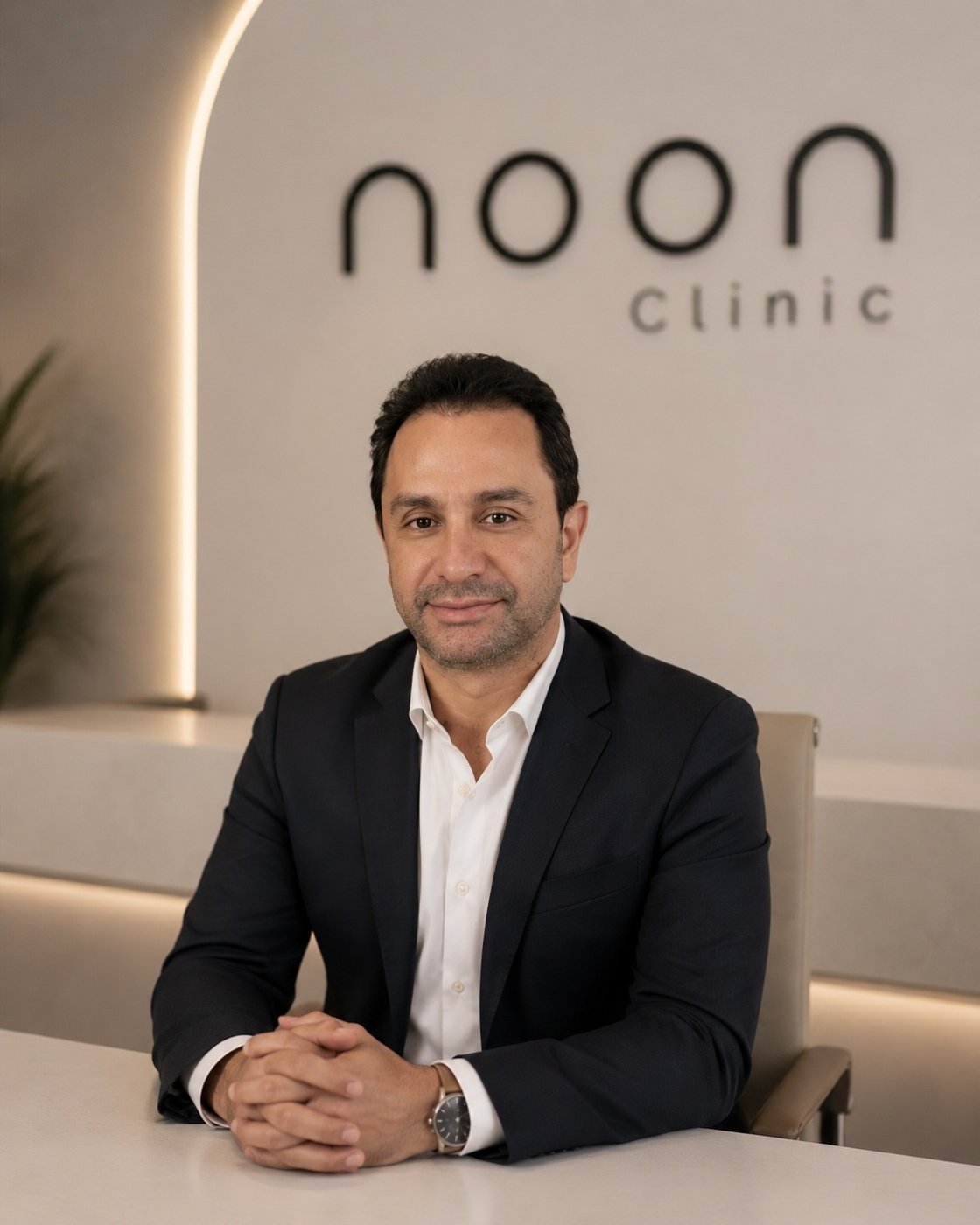
Your specialist
Dr. Fernando Ruiz
Plastic surgeon
Your consultation is in person in Medellín, with Dr. Fernando Ruiz, plastic surgeon.
About noon ClinicFAQ
Common questions
Will the scar show?
It sits in the natural crease of the eyelid or just below the lashes, so once it has matured it's usually hard to notice.
Can I combine it with another procedure?
Yes, it's often combined with a brow lift or a facelift. That's decided at your consultation.
Does eyelid surgery get rid of under-eye circles?
It depends on what kind you have. The surgery treats bags, hollowing under the eyes and excess eyelid skin, but the ASPS notes that it barely changes dark circles, which can come from genetics, lack of sleep or sun exposure. Your specialist decides at your in-person consultation whether your case calls for surgery, hyaluronic acid filler or another option.
Does eyelid surgery fix droopy eyelids?
If the droop comes from excess skin, yes, that's what it treats. But according to the ASPS, an eyelid can also look droopy because the forehead and brow have dropped, or because of ptosis, which is when the muscle that lifts the lid stretches. Ptosis needs a different surgical treatment. Your surgeon determines which is the case for you at your in-person consultation.
Are eyelid surgery results permanent?
The ASPS describes the results as long-lasting, but you keep aging naturally and your eyelids change over the years. Protecting your skin from the sun helps maintain the result. You see the final result between 2 and 3 months after surgery.
How much time off work do I need for eyelid surgery?
Time off work is about 7 to 10 days. Stitches come out in the first week, and between weeks 2 and 3 you're back to your routine and can wear makeup again. Your surgeon confirms the timing for your case.
Guides
Before you travel.
 A Thanksgiving plastic surgery trip to Medellín: what actually fitsYou've got Thursday and Friday off, the weekend tacks itself on, and you're wondering if that's enough time for a procedure in Medellín. The honest answer depends on your real number of days, not on how badly you want it to work.Read
Eyelid Surgery in Medellin, Colombia, on a Short TripOf every surgery on this list, this one comes closest to an actual short trip. It's still surgery on your face, and that part isn't short.Read
 Follow-up care after surgery in Colombia, once you're back homeThe surgery happened in Medellin. The follow-up doesn't stay there.Read
Also in face
Other procedures
- RhinoplastyBalance between your nose and the rest of your face, with your breathing in mind too.2 to 3 hours · Time off work 10 to 15 days
- Facelift and neck liftDeep rejuvenation that repositions the tissues of the face and neck.3 to 5 hours · Time off work 2 to 3 weeks
- Buccal fat removalMore defined cheeks by removing part of the buccal fat pads.30 to 60 minutes · Time off work 3 to 5 days
- Chin SurgeryA chin in proportion with your nose and your profile.1 to 2 hours · Time off work 7 to 10 days
- Rhinoplasty and Chin SurgeryYour nose and chin in the same surgery, planned with your whole profile in mind.Set by your surgeon · Time off work 10 to 15 days or more
- Ear surgery (otoplasty)Corrects prominent ears, with the scar hidden behind the ear.1 to 2 hours · Time off work 7 days
- Chin liposuctionDefines your neck and jawline by removing fat from under the chin.1 hour · Time off work 5 to 7 days
noon Clinic
Eyelid Surgery
Everything starts with an in-person consultation in Medellín: Dr. Fernando Ruiz, a plastic surgeon, examines your eyelids along with your brows and face, tells you whether eyelid surgery is right for you, and you get your plan in writing.
We reply on WhatsApp within minutes during business hours. We answer your questions and book your in-person consultation; we never diagnose over WhatsApp. Why noon