Plastic surgery · Face
Buccal fat removal in Medellín
More defined cheeks by removing part of the buccal fat pads.
- Duration
- 30 to 60 minutes
- Time off work
- 3 to 5 days
- Consultation with
- Dr. Fernando Ruiz
We reply on WhatsApp within minutes, during business hours.
The procedure
A procedure that removes part of the buccal fat pads in your cheeks to slim your midface.
It's done from inside your mouth, so it leaves no visible scars.
Is it for you
What you're looking for
- A round face from full cheeks
- Wanting a more defined face
- Good skin quality
Your surgeon makes the final call at your consultation.
Recovery
Step by step
Swelling and a soft-food diet.
You're back to your routine.
Your face gradually slims down.
Final result.
These are guideline times. Your surgeon gives you the exact ones.
Before you decide
All about buccal fat removal
Buccal fat removal, Bichat's fat pads or “cheek reduction”
Buccal fat removal takes out part of the buccal fat pads, sometimes called Bichat's fat pads. You may also see it called “cheek reduction,” “cheek fat removal” or “buccal lipectomy,” and in Colombia it's known as “bichectomía.” According to the American Society of Plastic Surgeons (ASPS), it's a natural pad of fat that sits in the hollow area of your cheek. Its size varies from person to person, and it can be different on each side of the face. That's why each case is evaluated individually.
Through the mouth or during a facelift?
It's usually done from inside the mouth, through an incision on the inner side of the cheek, so there's no visible scar. The ASPS explains that this fat is sometimes removed during a facelift, with no incision in the mouth. What calls for the most care is how much fat to remove: in an ASPS article, a plastic surgeon warns that taking out too much raises the risk of a hollow-looking face over the years. It isn't decided from a photo on social media: your surgeon decides after examining you at your in-person consultation.
Who it's for, and who it isn't
According to the ASPS, you may be a good candidate if you're in good health with a stable weight, don't smoke, have realistic expectations and are bothered by very full cheeks. It's also best to do it for yourself, not for someone else or to match an ideal image. The ASPS also notes that it isn't usually done on thin, narrow faces, because the face can look more gaunt with age. If your skin has already lost firmness, a surgeon explains in another ASPS article that it may need to be combined with a facelift.
When another option makes more sense
A round face isn't always caused by the buccal fat pads. Depending on your case:
- If the fullness is under your chin, we consider chin liposuction.
- If the width of your face comes from a very active masseter (the muscle you chew with), a surgeon quoted by the ASPS explains that they treat it with Botox instead of removing fat.
- If you want to define your cheekbones or jawline without surgery, there's hyaluronic acid filler, which is temporary and lasts 6 to 18 months depending on the area.
- If there's sagging in your cheeks and jawline, we consider a facelift.
At your consultation we look at where the fullness comes from and what makes sense for you. If a nonsurgical treatment is the right fit, Dr. Valeria Enciso, aesthetic physician, evaluates you.
Risks you should know about
Every surgery has risks, and this one does too. The ASPS lists, among others:
- Anesthesia risks.
- Bleeding, hematoma or fluid buildup (seroma).
- Infection or poor healing of the incisions.
- Asymmetry.
- Injury to a salivary duct.
- Injury to branches of the facial nerve, with temporary or permanent weakness of facial muscles.
- Numbness or other changes in sensation, persistent pain or prolonged swelling.
- Deep vein thrombosis and heart and lung complications.
- A result different from what you expected or with minimal change, and the possibility of revision surgery.
Before you decide, we go over each one with you, and you sign an informed consent form.
How to prepare
It's done in the licensed operating rooms at Q2, never in a doctor's office. Before surgery, in general:
- You get your pre-op tests, which are required.
- You stop smoking.
- You go over the medications you take with your specialist: the ASPS warns that aspirin, anti-inflammatory drugs and herbal supplements can increase bleeding. We tell you what to stop taking and what to bring.
- If you're traveling to Medellín from another city, come with an adult who can stay with you for the first few days.
Aftercare
For the first few days there's swelling and you eat soft foods. According to the ASPS, you may be given special mouth rinses to lower the risk of infection. As the ASPS explains, the stitches inside your mouth are usually dissolvable, though each surgeon works differently. Avoid touching them with your tongue until your surgeon says it's OK. You leave with clear instructions and come back for your follow-up visits until you're cleared.
Coming from abroad
Plan your trip.
If you are flying in, plan to stay in Medellín for about 1 to 2 weeks for this surgery, and fly home only when your surgeon clears you. Travel with an adult companion for the first days.
How a trip to Medellín for surgery works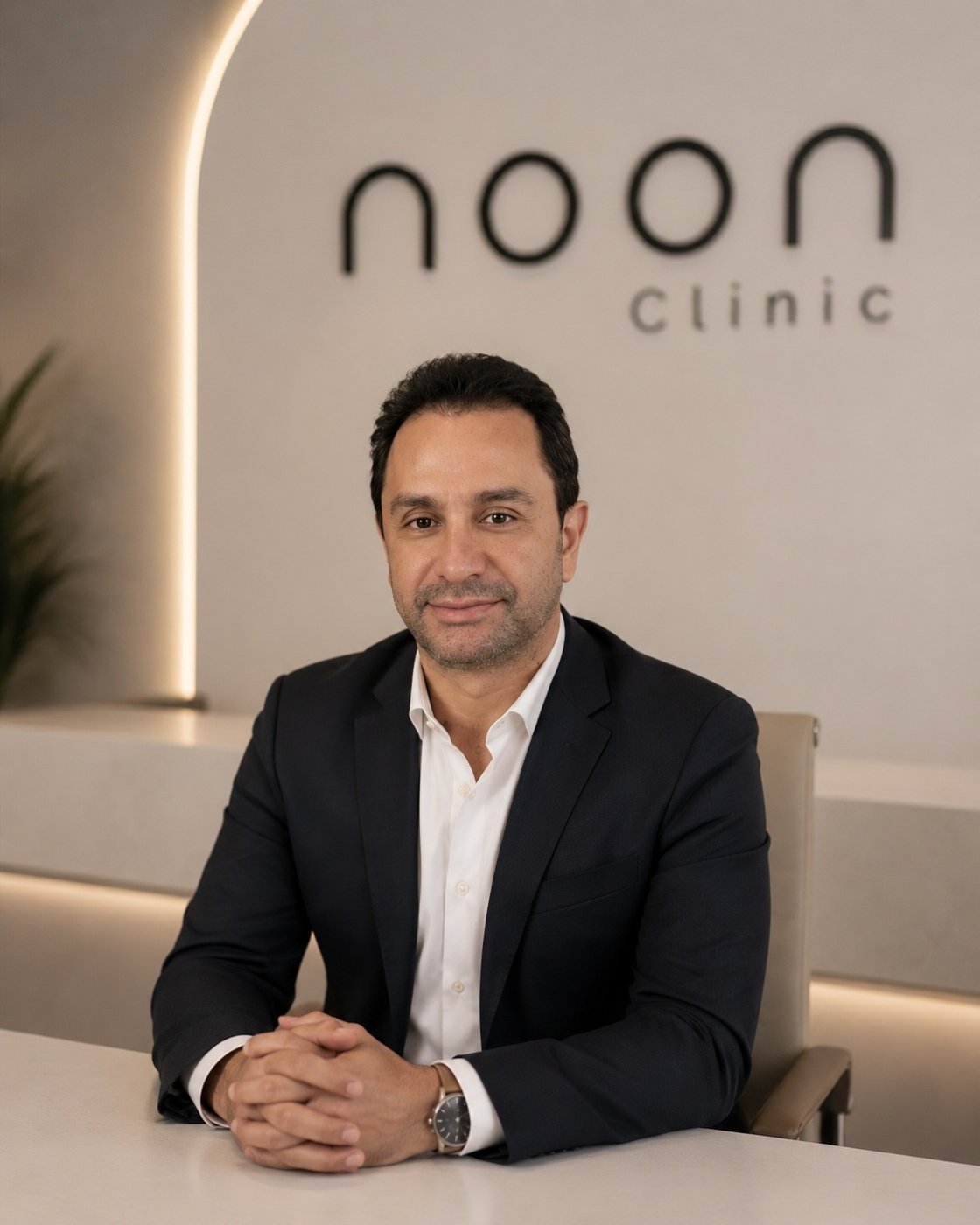
Your specialist
Dr. Fernando Ruiz
Plastic surgeon
Your consultation is in person in Medellín, with Dr. Fernando Ruiz, plastic surgeon.
About noon ClinicFAQ
Common questions
Will it leave a scar?
Not a visible one: the incision is inside your mouth.
Is it right for everyone?
No. If your face is already thin, it can make you look older, so each case is evaluated carefully.
Is buccal fat removal permanent?
Yes. The change is permanent, as an ASPS article points out, which is why the amount to remove is planned carefully. Your face keeps changing over the years: the buccal fat that remains also shrinks with age.
When will I see results from buccal fat removal?
At first, as the ASPS explains, swelling hides the change, and you may look the same or even fuller. Between months 1 and 3 your face gradually slims down, and the final result shows at 3 to 6 months.
Can buccal fat removal be done together with chin liposuction?
It can be considered. They treat different areas: buccal fat removal treats the cheeks, and chin liposuction treats the fat under your chin. ASPS articles explain that buccal fat removal can be combined with other procedures. Whether it makes sense to do both in the same surgery is up to your surgeon at your in-person consultation.
How much time off work do I need for buccal fat removal?
You'll need about 3 to 5 days off work. For the first few days there's swelling and you eat soft foods, and within the first week you're back to your routine. Your surgeon confirms the timing for your case.
Also in face
Other procedures
- Eyelid SurgeryA more rested look: it treats excess skin and bags on the eyelids.1 to 2 hours · Time off work 7 to 10 days
- RhinoplastyBalance between your nose and the rest of your face, with your breathing in mind too.2 to 3 hours · Time off work 10 to 15 days
- Facelift and neck liftDeep rejuvenation that repositions the tissues of the face and neck.3 to 5 hours · Time off work 2 to 3 weeks
- Chin SurgeryA chin in proportion with your nose and your profile.1 to 2 hours · Time off work 7 to 10 days
- Rhinoplasty and Chin SurgeryYour nose and chin in the same surgery, planned with your whole profile in mind.Set by your surgeon · Time off work 10 to 15 days or more
- Ear surgery (otoplasty)Corrects prominent ears, with the scar hidden behind the ear.1 to 2 hours · Time off work 7 days
- Chin liposuctionDefines your neck and jawline by removing fat from under the chin.1 hour · Time off work 5 to 7 days
noon Clinic
Buccal fat removal
Everything starts with an in-person consultation in Medellín: Dr. Fernando Ruiz looks at where the fullness in your face comes from, tells you whether buccal fat removal is right for you, and you get your plan in writing.
We reply on WhatsApp within minutes during business hours. We answer your questions and book your in-person consultation; we never diagnose over WhatsApp. Why noon