
Plastic surgery · Breasts
Breast implant exchange or removal in Medellín
Replace, resize or remove your breast implants safely.
- Duration
- 2 to 4 hours
- Time off work
- 1 to 2 weeks
- Consultation with
- Dr. Fernando Ruiz
We reply on WhatsApp within minutes, during business hours.
The procedure
Surgery to replace older implants, change their size or remove them (explant surgery), with or without a breast lift.
If the capsule has hardened (capsular contracture), it can be treated in the same surgery.
Is it for you
What you're looking for
- Implants you've had for many years
- Wanting a different size
- Capsular contracture, discomfort or wanting them removed
Your surgeon makes the final call at your consultation.
Recovery
Step by step
Post-surgical bra and relative rest.
Gradual return to your routine.
Your result settles.
These are guideline times. Your surgeon gives you the exact ones.
Before you decide
All about breast implant exchange and removal
Exchange or removal: what each one means
A breast implant exchange, also called implant replacement, takes out your implants and puts in new ones. Removal, also called an explant or explant surgery, takes them out without putting in new ones. In the US you'll often see them called breast implant revision and breast implant removal. According to the American Society of Plastic Surgeons (ASPS), an exchange lets you go up or down in size, change the shape or type of implant, and reposition it on the chest. In a removal, the ASPS explains, your surgeon can also take out any silicone that has leaked and the scar tissue that forms around the implant, called the capsule.
Why implants are replaced or removed
Breast implants aren't considered lifetime devices, the FDA explains, and at some point they may need to be replaced or removed. According to the ASPS, the reasons include:
- Wanting a different size, or switching from saline to silicone.
- Pain or hardening from capsular contracture.
- A rupture, a leak or an implant that has shifted out of place.
- Breasts that feel too heavy, discomfort, or not wanting implants anymore.
The ASPS adds that it's best if you're in good health, at a stable weight, don't smoke and have realistic expectations.
Just the implant, or the capsule too?
A capsule of scar tissue forms around the implant. The FDA describes two approaches to removal. One is to take out only the implant and leave the capsule in place, which requires less dissection and may carry a lower risk of complications such as bleeding. The other is to remove part or all of the capsule along with the implant, a surgery that can be more extensive and is sometimes called en bloc resection. According to the ASPS, the capsule is often soft and doesn't need to come out, but if it hardens and becomes painful, that's usually a reason to remove it. Your surgeon decides which approach is right for you after examining you.
When to add a lift or another surgery
If you have your implants removed without replacing them, the ASPS warns that your breasts may look flatter or saggier than before, with irregularities or dimpling. That's why another surgery is sometimes added:
- If your breasts sag or the skin is loose, we consider a breast lift, with new implants or using only your own tissue.
- If you're exchanging your implants and want smaller breasts, a breast reduction can be added in the same surgery.
- If you're getting new implants, our breast augmentation page explains the types available.
At your consultation, we'll tell you what makes sense for you.
Risks you should know about
Every surgery has risks, and this one does too. The ASPS lists, among others:
- Anesthesia risks, bleeding, hematoma, infection and fluid buildup.
- Deep vein thrombosis and heart or lung complications.
- Asymmetry, skin that loosens again, or a result that isn't what you expected.
- Changes in skin and nipple sensation, and persistent pain.
- Poor wound healing, skin loss, fat necrosis or needing another surgery.
- For an exchange, the ASPS also lists breast implant-associated anaplastic large cell lymphoma (BIA-ALCL) or other very rare cancers in the capsule.
Before you decide, we walk you through each one and you sign an informed consent form.
Preparing for surgery and aftercare
You get your pre-op tests and, if needed, breast imaging such as a mammogram, ultrasound or MRI, according to the ASPS. You stop smoking and go over everything you take with your specialist: aspirin, anti-inflammatory medications and herbal supplements can increase bleeding. We'll tell you how to fast and what to bring. You need an adult to take you to and from surgery and stay with you for at least the first night. You go home in a post-surgical bra and sometimes with a drain, a thin tube that removes blood or fluid. You get clear instructions and follow-up visits until you're discharged.
Coming from abroad
Plan your trip.
If you are flying in, plan to stay in Medellín for about 1 to 2 weeks for this surgery, and fly home only when your surgeon clears you. Travel with an adult companion for the first days.
How a trip to Medellín for surgery works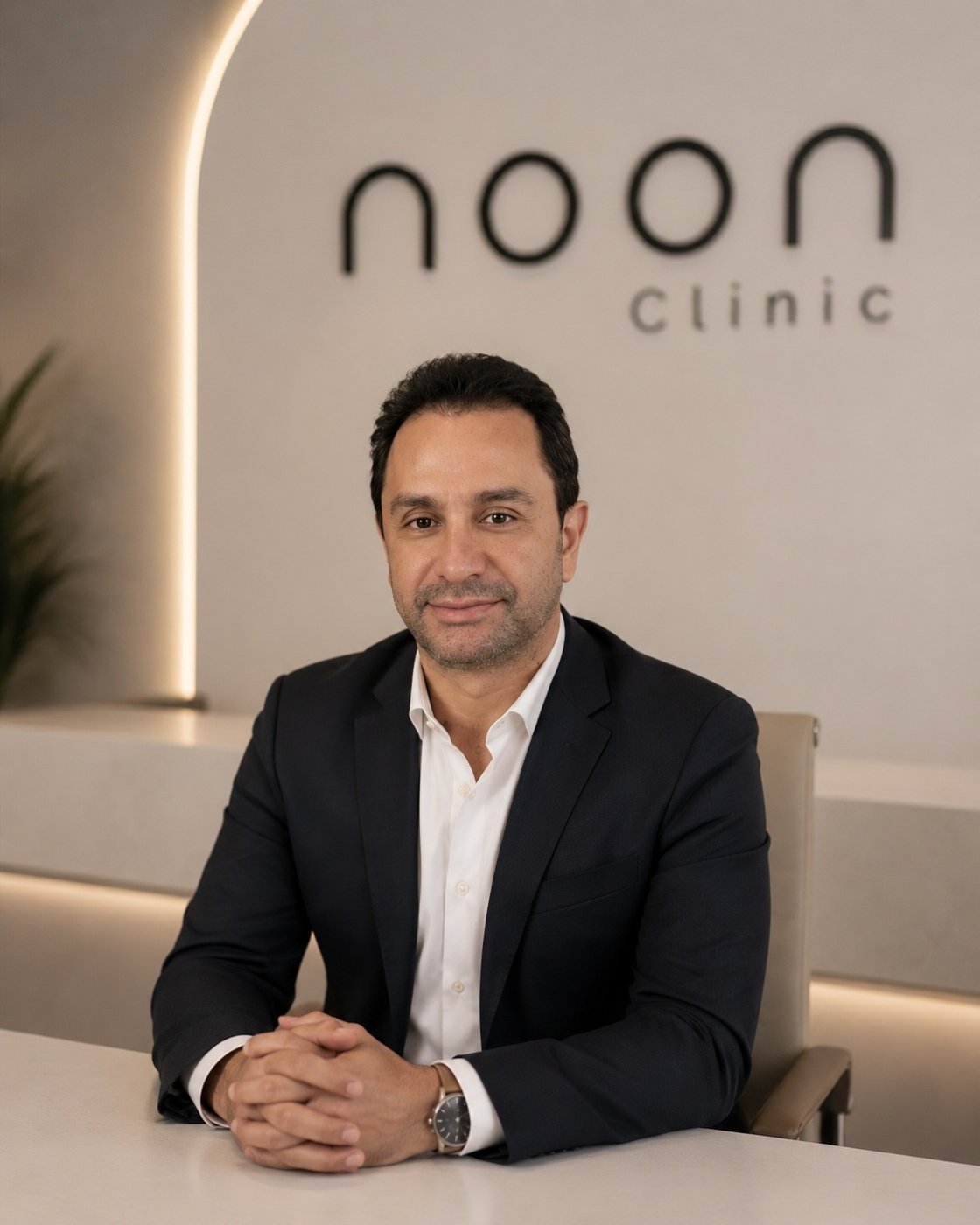
Your specialist
Dr. Fernando Ruiz
Plastic surgeon
Your consultation is in person in Medellín, with Dr. Fernando Ruiz, plastic surgeon.
About noon ClinicFAQ
Common questions
If I have my implants removed, what will my breasts look like?
It depends on your skin and tissue. Removal is often combined with a breast lift (mastopexy) so your breasts end up firm.
How much time off work do I need for a breast implant exchange?
About 1 to 2 weeks. In the first week you wear a post-surgical bra and stay on relative rest. From week 2 to week 4 you gradually get back to your routine, and your result settles between 3 and 6 months. Your surgeon will confirm the timing for your case.
Do breast implants have an expiration date?
They don't have a set date, but they aren't meant to last a lifetime either. The FDA explains that there's no way to predict how long an implant will last, and that the longer you have it, the more likely it is to need removal or replacement. If yours are silicone, the FDA recommends regular screening, and your surgeon will tell you how often and which test to get.
How do I know if my silicone implant has ruptured?
Often you can't tell. According to the FDA, most silicone implant ruptures cause no symptoms and don't change how the implant looks or feels. An MRI is the most effective way to detect them, and an ultrasound is an acceptable alternative if you have no symptoms. If your imaging shows a rupture or a leak, the ASPS considers that a reason to remove or replace the implant.
Will removing my implants cure breast implant illness?
No one can promise that. The FDA explains that symptoms such as fatigue, memory loss, rash, “brain fog” or joint pain may be associated with breast implants, and that some people report improvement after having them removed without replacement. It also notes that these symptoms and their causes are still poorly understood. If you have any of them, tell your surgeon at your consultation.
Also in breasts
Other procedures
- Breast AugmentationMore volume and a better shape, with implants chosen to fit you.1.5 to 2 hours · Time off work about 1 week
- Breast LiftLifts and firms your breasts, with or without implants.3 to 5 hours · Time off work 2 to 3 weeks
- Breast Lift with ImplantsLifts sagging breasts and adds volume with implants.3 to 5 hours · Time off work 2 to 3 weeks
- Breast Lift Without ImplantsLifts and reshapes your breasts using your own tissue, without implants.3 to 5 hours · Time off work 2 to 3 weeks
- Breast ReductionLighter, more proportionate breasts and relief for your back and neck.3 to 4 hours · Time off work 2 to 3 weeks
- Gynecomastia surgeryA flatter, more defined male chest.1 to 2 hours · Time off work 7 to 10 days
noon Clinic
Breast implant exchange or removal
Everything starts with an in-person consultation in Medellín: Dr. Fernando Ruiz reviews your implants, your skin and your test results, tells you whether it makes sense to replace them, remove them or add a lift, and you get your plan in writing.
We reply on WhatsApp within minutes during business hours. We answer your questions and book your in-person consultation; we never diagnose over WhatsApp. Why noon