
Aesthetic medicine · Skin
Melasma and dark spot treatment in Medellín
A combined medical plan to even out your skin tone.
- Sessions
- Plan based on your diagnosis
- Downtime
- Depends on the treatment
- Consultation with
- Dr. Valeria Enciso
We reply on WhatsApp within minutes, during business hours.
The treatment
Dark spots have different causes, so they're diagnosed first. Then your plan combines what your skin needs: skin-lightening treatments, chemical peels, in-office technologies and at-home care.
Melasma is kept under control with consistency and sun protection.
Is it for you
What you're looking for
- Melasma
- Sun spots
- Dark marks left by acne
Your doctor makes the final call at your consultation.
Before you decide
Everything to know about melasma and dark spots
Melasma: what it is and why it happens
Melasma, the “mask of pregnancy” and paño (its common name in Spanish) are all names for the same thing. The American Academy of Dermatology (AAD) describes it as flat patches, darker than your natural skin tone, ranging from brown to bluish gray, that usually appear on the cheeks, forehead, chin or above the upper lip. It's more common in women and in medium to dark skin tones. It isn't contagious, and it isn't a type of cancer. Among the things that trigger it or make it more likely, the AAD lists:
- Sun exposure.
- Pregnancy and birth control pills.
- Some medications that make your skin more sensitive to the sun.
- Tanning beds and thyroid problems.
- Being a woman of Latin heritage, or having family members with melasma.
Diagnosis first: not every dark spot is melasma
A sun spot, a mark left by acne and melasma can look alike, but they aren't treated the same way. As the AAD explains, treatment depends on what's causing the spot, and if it comes from acne, the acne has to be under control first. According to MedlinePlus, from the U.S. National Library of Medicine, melasma is diagnosed by looking at the skin; sometimes a special lamp, called a Wood's lamp, is used to help guide treatment. That's why we don't diagnose it from photos or over WhatsApp: your doctor determines what type of spot you have when she examines you in person. Here's what happens at the consultation (in Spanish).
What your plan may include
According to MedlinePlus, melasma treatment may include prescription creams, chemical peels and, when melasma is more severe, laser. Sun protection is what helps most to prevent it. At noon, your plan may combine:
- Prescription skin-lightening treatments.
- Chemical peels.
- Technologies such as laser, depending on your skin.
- Sun protection and at-home care every day.
What gets combined, and in what order, is up to your doctor, based on your type of spots and your skin. Results are gradual and, because melasma can come back with sun exposure or hormonal changes, the plan continues with maintenance.
When to wait or adjust the plan
There are times when the plan changes, or when it's better to wait:
- If you're pregnant, breastfeeding or trying to get pregnant, tell your doctor before you start. The AAD says to avoid hydroquinone and retinoids, such as tretinoin or products with retinol, during pregnancy.
- If you plan to keep using tanning beds: according to the AAD, they make melasma worse and can keep treatment from working.
- If you're hoping it will go away for good: melasma is controlled with consistent care and, according to the AAD, it can be stubborn even when you follow the plan.
Risks you should know about
Treating dark spots also has risks, including:
- Irritation: according to the AAD, if a product burns or stings, it's irritating your skin, and that can make the spots darker.
- With chemical peels, the AAD mentions redness, peeling and temporary darkening of the skin, and with medium and deep peels, lighter skin. In darker skin, if peels are done by someone without experience treating these skin tones, they can leave permanent changes in skin color.
- With laser: not every laser is right for every skin. It depends on the laser and on your Fitzpatrick skin type, which is why your skin is assessed first.
Before you start, your doctor explains the risks of each part of your plan.
How to care for your skin at home
What you do at home is also part of the treatment. The AAD recommends:
- Sunscreen every day, even when it's cloudy, on all skin not covered by clothing.
- Seeking shade and wearing a wide-brimmed hat and sunglasses with UV protection.
- Gentle, fragrance-free products.
While you're getting peels, sun protection has to be strict. For your consultation, bring a list of the products you use on your skin and the medications you take.
Coming from abroad
Plan your trip.
Aesthetic treatments usually take the same day or a few days, so they fit into a short trip. Your doctor confirms your plan at the consultation.
How a trip to Medellín for surgery works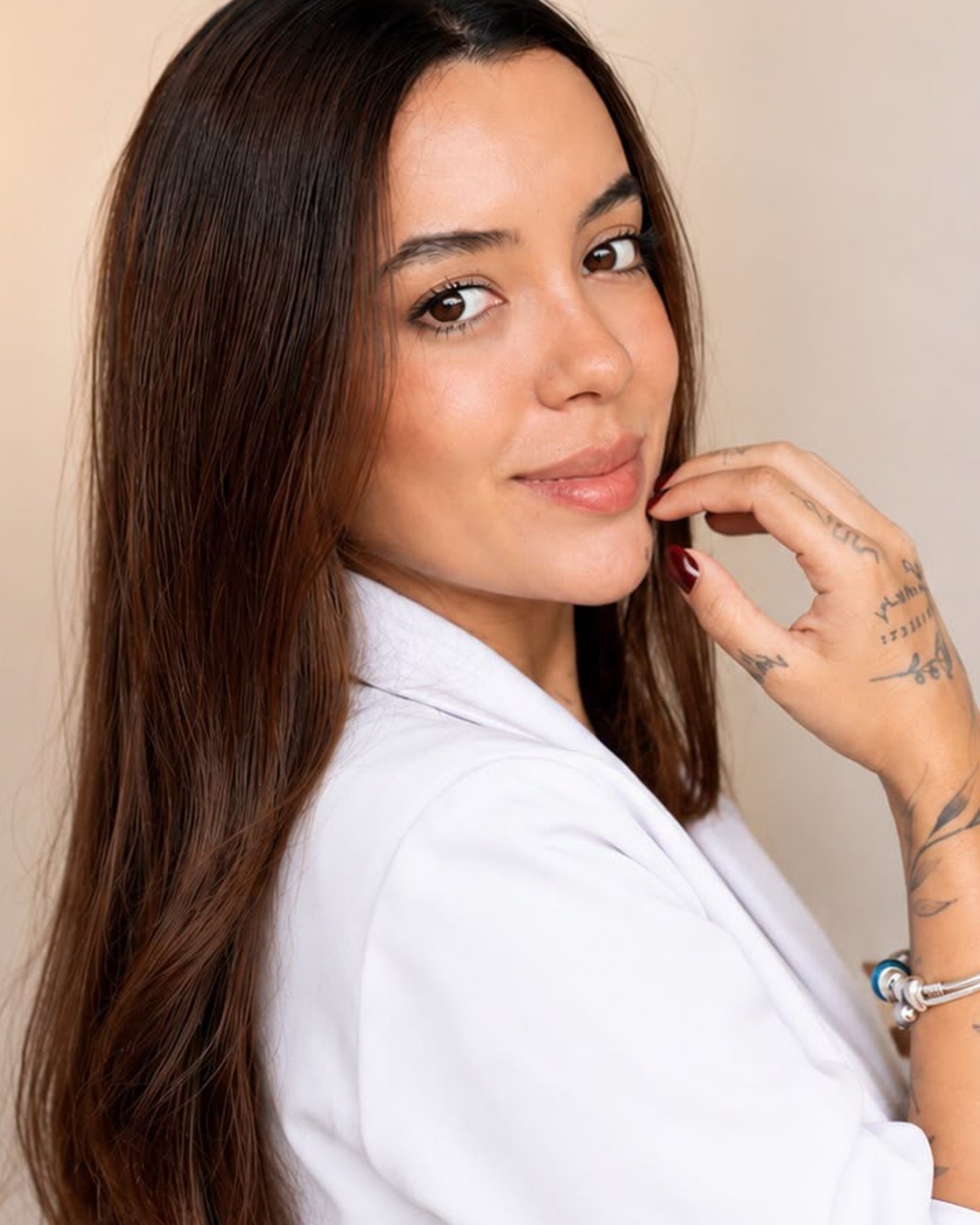
Your specialist
Dr. Valeria Enciso
Aesthetic physician
Your consultation is in person in Medellín, with Dr. Valeria Enciso, aesthetic physician.
About noon ClinicFAQ
Common questions
Can melasma be cured?
It can be kept well under control, but it can come back with sun exposure or hormonal changes. That's why maintenance is key.
Will melasma go away on its own after pregnancy or if I stop taking birth control pills?
It can lighten, though that doesn't always happen. According to the AAD, when pregnancy or a medication triggered it, melasma can fade after you give birth or stop taking that medication, and according to MedlinePlus it can come back with another pregnancy, with hormones or with sun exposure. Don't stop taking your pills on your own: talk to the doctor who prescribed them.
What sunscreen should I use if I have melasma?
The AAD recommends a broad-spectrum, water-resistant sunscreen with SPF 30 or higher, ideally tinted and with iron oxide, because visible light can also make melasma worse, especially in darker skin tones. Wear it every day, even when it's cloudy, and reapply at least every two hours.
Does laser get rid of melasma?
It usually isn't the first step. According to the AAD, laser and light treatments can be added to sun protection and creams when melasma persists, to improve results. Whether laser is right for your skin, and which one, is up to your doctor at your consultation, because it depends on the laser and on your Fitzpatrick skin type.
Can I use skin-lightening creams or home remedies for dark spots?
Not on your own. The FDA has received reports of rashes, facial swelling and skin discoloration that can be permanent with over-the-counter skin lighteners containing hydroquinone, and it has found mercury in some of them. And if something burns or stings, it's irritating your skin, which according to the AAD can make dark spots darker.
Also in skin
Other treatments
- Skin boostersDeep hydration and glow from within.2 to 3 sessions · 30 minutes
- Platelet-rich plasma (PRP)Skin and hair regeneration with your own platelets.3 sessions · 45 to 60 minutes
- Chemical PeelsSkin renewal for dark spots, acne and texture.Series of 3 to 6 sessions · 30 minutes
- MicroneedlingStimulates collagen for scars, pores, and firmness.3 to 4 sessions · 45 minutes
- Medical facialClean, balanced skin, ready for other treatments.Monthly · 60 minutes
noon Clinic
Melasma and dark spot treatment
Everything starts with an in-person consultation in Medellín: your aesthetic physician takes a close look at your spots and tells you what type they are, and you get your plan in writing, with at-home care included.
We reply on WhatsApp within minutes during business hours. We answer your questions and book your in-person consultation; we never diagnose over WhatsApp. Why noon